
 4.7
4.7
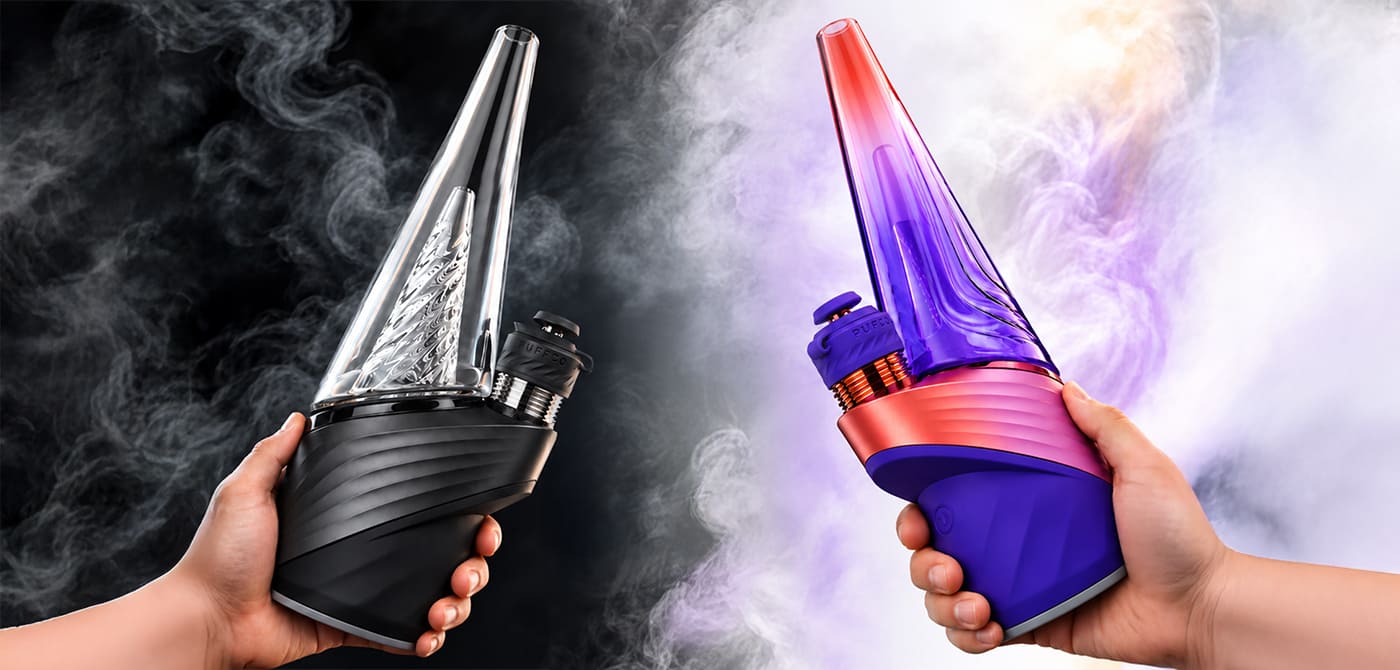

Transcript of Video:
Is a limited edition worth it? Every six months or so, Puffco comes out with a limited-edition color, like the Gamer Edition. I think the Plasma that we have here is about $100 more expensive. I’m Nima from TVape TV. I’m the CEO of Thermodyne Systems, and every six months to a year, Puffco comes out with a very well-refined, beautiful limited edition.
We’re going to go top-down and do a temperature test between a few devices just to see where it sits. We did another temperature test with a Puffco Peak Pro from a few years ago, using a unit that had already been opened. This time, I also have a little sneak peek for you because we’re going to disassemble one of the battery cells, which is something you should not do at home. We do not recommend it.
You need to be a professional to do it. Oh my God. All right. We know what we’re doing. Definitely. I think so. Let me try again. Let’s go top-down. I’m going to do the temperature test and then tear the unit apart and look inside. Let’s get started for science.
We asked people whether they would like the limited-edition one torn down or this test unit from a couple of years ago. In theory, they should be the same inside, or at least very similar, unless Puffco made some updates they didn’t tell anyone about. Manufacturers generally want to tell everybody about the updates they make.
The vote winner was the limited edition with 16,840 upvotes, which I’m not sure how we got because the video didn’t get that many views. There was also another comment from former President Obama saying, “Do the limited-edition one.” Just for the record, I only used stuff once when I was in college, and I didn’t inhale.
Obviously, both of those comments were manufactured. However, this one was the winner, so that’s what we’re going to do. I must be honest: when I saw this one, since it’s a Gamer Edition and we have a culture of gamers here in the company, I kind of wanted one. But I have so many things that I barely get to use any of them. It’s all prototypes, tests, and things like that.
This is coming from a company where we obviously have several brands ourselves. It’s not a lot, maybe four of them: Zeus, Utillian, Tronian, and LITL, on top of the TVape brand. I would say Puffco has some of the most capable industrial designers and designers in general. They really know how to make things look beautiful.
The first thing I noticed was the angle of this shot. For a second, I thought maybe they had angled the top, but in reality they didn’t. I was going to give them a huge shout-out for that because it looked cool. But this is beautiful. You get the regular stuff, and they even went through the trouble of coloring this.
I think I remember these used to have a cover here, but this one doesn’t have a cover. Okay, we just opened a limited-edition one and it’s missing the lids. That’s not cool. What happened?
The first thing we’re going to do is a temperature test. I did a temperature test in the Switch 2 video where I took the vote on breaking this thing down. Look at that glass.
When we did the temperature test on the Puffco Peak Pro with the Switch 2 and the Utillian 8 Turbo, we noticed that the Puffco Peak Pro was about 10 degrees colder. That was a bit surprising because I thought Puffco would be number one. I also thought maybe the Switch 2 would be number one because it has that infrared sensor.
These are RTD sensors, so they touch the area where they are measuring the temperature. The Utillian 8 Turbo has a different technology where the bucket has a temperature sensor underneath it. I was expecting that to be less accurate, but the opposite turned out to be true.
This is the limited edition and the latest edition, so we’re going to test it again and see how it compares. I brought in the usual suspects again. We swapped out the chamber on this one just to make sure the previous chamber wasn’t affecting the accuracy.
The other device I wanted to put into the mix was the Switch Go, which we’re going to test side by side, along with the Carta Sport. Matthew is working through the app to make sure all three devices are set to the same temperature. Everything is ready for the test.
We’re going to start with the Focus V Carta, and I’m going to use the same device for temperature testing through touch and resistance. If you want really advanced temperature readings, I think thermal cameras are much better, especially the very advanced and expensive ones.
I’m not talking about the ones you buy for $1,000 or $2,000. You really have to go into the $10,000 to $20,000 range to get something very useful.
We can see that the Carta is now at temperature. It’s set at 220°C, which is 428°F. It reads around 225°C, so it seems to be about five to eight degrees hotter than it’s supposed to be. That’s still pretty good.
The Switch Go is a different type of beast because of the way the temperature sensor is positioned. As we saw in the teardown, the temperature sensor sits between the heaters. It didn’t perform quite as well. I think the Switch 2 was running hot as well, but it was still pretty accurate, so it’s within a kind of premium level.
Now it’s at 428°F according to the app, which is 220°C, and we can see that it’s about 4.5 degrees cold. That makes sense. It’s harder to calibrate the temperature because there’s a crucible layer of glass on top of the titanium, while the titanium underneath acts as both the heating element and temperature sensor.
They need to do testing and software calibration based on whatever information they receive from the sensor. We’re about five to eight degrees low here. So this one is a little on the low side, while the other one is a little on the high side.
Overall, that’s pretty acceptable. The average person probably couldn’t tell the difference between concentrate vapor produced with a five-degree temperature difference. Even a veteran would have to be very good to tell 10 degrees apart. I think I can, and I’ve done it in testing before, but I wouldn’t nail it every time.
Now we’re going to do the U8. I’m actually pretty curious about this one because it’s a unit we engineered. This one doesn’t have an app, so everything is controlled directly from the device.
This one has a SwapCell chamber. The technologies are somewhat similar. With one design, the whole assembly at the top has to be replaced when the heating chamber goes. With the SwapCell, you’re replacing the crucible that has the heating element inside.
This one is a glass crucible. The other one doesn’t have the heating element built into it because the heating element is underneath. You can swap the crucible out.
That’s almost bang on, but we need to give it a little more time to see whether it overshoots or undershoots. It’s about 1.72 degrees off. Milad is the development manager, so good job so far.
Now you can see it going a little higher, but it’s still the most accurate. Let’s go to the Puffco Peak Pro.
It should be 220°C. The app is showing Fahrenheit, so don’t get confused. 428°F is equal to 220°C.
Puffco is generally known for having very good flavor. We’ve also noticed that generating vapor at lower temperatures generally gives you a better flavor profile, although the vapor is relatively thinner.
That wasn’t very good for the Puffco Peak Pro, but we’re going to try it one more time. Maybe I didn’t have the tester positioned properly. There we go. We went to around 205°C.
Last time we tested another device, it was about 10 degrees cold. This time, at best, it looked 10 degrees hot, and now it’s around 15, 17, or 18 degrees cold. Why is it so far off? That’s not great. You’re so pretty, though.
We’re going to give it the benefit of the doubt and go higher with the temperature to see whether it closes the accuracy gap. Maybe it just isn’t that accurate at the lower range.
We’re going to 232°C. It should show 232°C here. It seems to drop a little bit afterward. Maybe that’s by design. Perhaps they want it to drop slightly, similar to the drop feature on the Dr. Dabber, but they’ve made it the default behavior.
I would certainly invite Puffco engineers to chime in in the comments and explain why they do that, why it was programmed this way, or whether there’s another explanation.
The unit appears to be around 15 degrees cold, and at one point the difference is closer to 20 degrees. So that wasn’t great. It was even further off than the other device.
Before I get into the teardown, these are the hot knives. Each one is slightly different. There are multiple versions, and some are better at certain things than others.
Originally, when I saw them, I thought this was the dumbest product ever. It seemed like such a single-use device. After getting into it, though, I started to understand it more.
The regular dab tools can get annoying. You have your concentrate on the tool and want to put it into the chamber. The chamber almost has to pull the concentrate away from the tool, and you’re still going to have material left on the tool.
It can be wasteful. Some of it gets smeared around the top and doesn’t get vaporized properly. So I’m not a big fan of average dab tools.
I know some people who are experts really like the ones with a pointy tip, almost like a needle. I understand that because the material comes off more easily. The average ones are more like tiny rods.
If you want me to get into the nitty-gritty, take these apart, and tell you some cool things about them, let me know. There are cheap ones, more expensive ones, and some are smarter than others.
One thing Puffco thought through is what happens when you put the tool down with concentrate on it. Their design doesn’t roll. For example, this one is from our own brand, and we didn’t think that part through perfectly. It rolls a little.
Obviously, it’s less than half the price or something like that, but that doesn’t matter to people who simply want the best. Those people want products where details like that have been thought through.
We’re also going to tear down the glass at the end. A lot of people soak the whole thing in alcohol when they want to clean it. At the end, we’re going to show you what’s inside and how the glass comes apart, although disassembling these components is not something we recommend for normal cleaning.
Here’s another thing about the device. Look at the bottom. It’s beautiful. People wonder whether it really needs to be this expensive, but look at the way the colors are matched.
Different parts may come from different facilities, yet the colors still have to match. Achieving that requires extensive prototyping.
Puffco produces these limited-edition colors, and every time one sells out, there are still tons of people looking for it afterward. They generally don’t return to previous versions. I still have people asking, “Hey, do you have that one?” even when it sold out two years ago.
That’s the thing about limited colors. They come out every once in a while, and once they’re gone, they’re gone.
I’m going to try to take this apart as carefully as possible without wasting too much time. You can see that even this red part is different. On the regular devices, it uses a standard color. We can check that. Here you can see that the regular one is black.
This is the standard chamber. It’s the older, regular-sized chamber. You can see how much attention to detail goes into making even that part match correctly.
If you look at a fully assembled chamber, there’s a bunch of reclaim at the bottom. Here’s the connector. There’s a small base that gets soaked in reclaim, and the temperature sensor is in the middle.
That’s basically what this larger chamber is going to look like inside, except the walls of the 3D chamber are higher. The board is also slightly higher.
That means there should be less reclaim. More of your concentrate should stay inside and get vaporized rather than ending up inside the rest of the device.
I think that’s also why replacing the whole chamber matters. Over time, there can be so much buildup that the casing becomes counterproductive and develops unwanted smells.
You don’t have the same type of issue with the Switch Go because the bucket is right there. Any reclaim is accessible, so you can take the bucket out and clean the area. That’s one advantage of that design.
With the Utillian 8 Turbo, you can access the area underneath and use a Q-tip when the chamber comes out. So the user can clean it. It’s a different approach to the technology.
Now we’re getting into the body. This faceplate looks like one of the last parts installed during assembly. Once it comes off, you can see that everything underneath is still intact if it’s removed carefully.
When a Puffco gets used quite a bit, there can be a lot of reclaim in here. In some instances, it gets into nooks and crannies that you can’t easily clean without taking the outer structure apart.
Here’s another interesting part. This shiny piece is glued on and manufactured separately. The main piece appears to be molded metal. You can see what look like mold marks, and then they paint over it to get this beautiful gradient.
We’re actually looking at a similar type of gradient technology for one of our future products. There are finishes where even touching the surface can change how the color looks. That technology can be expensive, but it can be really cool for certain devices.
If you look strictly at material cost, Puffco may not be the most expensive. I think the Dr. Dabber Switch 2 may use more expensive components because the induction heater is quite custom and unique. Its sensor, as far as I understand, is an infrared temperature sensor.
That’s one of the ways you can measure temperature. In terms of raw materials, Puffco may not be the most expensive, but a lot of the value comes from refining the product.
Even small details, like this ridge, have been thought through. It provides a little more grip without causing the device to stick to the table. These are the little design decisions Puffco does very well.
They also use a lot of silicone, which some other manufacturers avoid using excessively. Puffco makes it work, and people absolutely love the products.
Do the special editions cost more than the others, or are they just special? Good question.
The special editions generally cost more than the regular colors because they’re produced in smaller batches. The development and production costs have to be distributed across a smaller number of units.
There’s also a sticker here that I think is designed to prevent light from the LEDs from bleeding into areas where it shouldn’t. That helps make the lighting more accurate. When it comes to light channels and things like that, Puffco is at the top of the game.
Now the sleeve comes off. If you ever wanted to see what’s underneath the outside of a Puffco Peak Pro, here you go. Of course, you shouldn’t tear apart a device that’s under warranty and then pretend it’s a warranty problem.
Under the sleeve, you can see the molded pieces and two different colors of silicone. I assume they’re using them partly to control how the light shines through the side.
The LEDs are positioned underneath these areas, which is something you see on other devices as well. We’re very familiar with this type of arrangement. The LEDs point upward and the surrounding materials control how that light appears on the outside.
I always like the color of these connectors. They usually look gold. I’m not sure whether they’re actually using gold in these connectors, and I don’t think so, but it certainly looks cool.
We once visited an advanced silicone manufacturer in China that could do silicone overmolding on metal parts. You could have a metal component with silicone sections protruding from it and have it essentially function as one piece.
They used these manufacturing techniques for medical equipment. We were there because some of the internal parts of the Zeus Arc combine hard plastic and silicone, so that manufacturer did some work for us.
They were showing us other things they could manufacture to open our minds to the possibilities. One device they showed had a very grippy body. It was metal, so it felt strong and durable.
They also made breathing equipment and other medical products. When we went to another floor, we were walking through an area to get to the next section they wanted to show us. They asked, “Do you want to see baby products?”
There were several people touring the facility with us, including Nariman and Milad. I thought, baby products? Of course. Products for babies have to be manufactured in very clean environments, especially things such as silicone baby bottles and medical components.
We went into this huge separate area. I started walking through with the salesperson who was giving us the tour, while the others were following me. Then I noticed all the ladies had stayed behind.
As soon as I walked in, I realized these weren’t baby products. These were adult products for personal enjoyment. There were full-size bodies that looked surprisingly realistic. The level of detail and manufacturing technology was fascinating, including attempts to integrate electronics into them.
We did a U-turn and continued the tour through the areas containing the products we were actually interested in. But it was fascinating to see how far that manufacturing technology had gone.
Now back to the device. I forgot to take the bottom off. There’s also a serial number down here. If your device is out of warranty, don’t try using this one for a warranty claim. Puffco engineers watching this are probably thinking, “Take that serial number.”
These screws also use a different head. It’s almost like they don’t want you to take the device apart. Maybe somebody’s project was specifically to determine which screws would keep people out, especially that CEO from Thermodyne Systems who keeps testing their units.
Now we can get into the wireless charging system.
When you put your watch or phone on a surface and it charges wirelessly, you’re using a form of electromagnetic induction. Inside the device, there’s a round component involved in that system.
Current runs through it, and there’s another corresponding component in the wireless charger. Your phone uses a similar type of system.
You need the component inside the device and a compatible charging dock. Chargers made for phones may work, although matching the size and positioning tends to improve efficiency.
The component itself may only cost a few dollars, but integrating it properly with the rest of the platform introduces additional engineering and manufacturing costs.
It’s basically a round assembly that helps create a magnetic field. You pair it with the corresponding charging side, and that electromagnetic interaction can be used to charge the battery.
It’s not necessarily the most efficient method, but it’s extremely convenient.
We’ve actually assessed this type of technology for another product that may launch in 2027. It’s a very advanced product in a completely different category.
I’m curious what you guys think about wireless charging. Would you like a device that could simply live on a wireless charging pad on your desk? And would that functionality be worth paying another $25 for?
Let’s say the device would otherwise cost $425, but adding wireless charging brings it to $450. Would you pay the difference? I’d really like your take on it.
That extra cost is just for the functionality inside the device. You still need the wireless charging dock itself.
Even if you go to places like AliExpress or DHgate, cheap wireless charging docks can cost around $25 or $30. Higher-quality ones from major electronics brands can cost considerably more.
A Puffco-branded one is also designed specifically for a specialized device. People who really want the full Puffco setup may be willing to pay for it.
Another component affecting the design is the magnets. There are magnets positioned around different parts of the product, and they’re important to how the whole system functions.
Anything with magnetic connector technology needs these components. Magnets like these are now common across consumer electronics, even though they weren’t as widely used 10 years ago.
They’re used in everything from everyday electronics to much more advanced systems. These components and their supply chains can also influence manufacturing costs.
Another thing I really like is the LED system. The LEDs extend toward the bottom, which is why you see the bottom of the device glowing.
This milky-looking material still lets light pass through. That’s light diffusion.
When you’re designing an LED system, you have to put the LEDs somewhere and then direct their light through light channels. Making the channels slightly milky diffuses the light so you don’t see one extremely bright dot.
If the diffusion isn’t effective, you can see the individual LED source instead of a smooth lighting effect. Puffco handles this very well.
Here, the LED light goes through the milky shell and then through the silicone. At the bottom, you get these waves of changing colors that work together with the color changes higher on the device.
It looks absolutely gorgeous.
One of the comments on the last video asked us to show the battery details, particularly the mAh rating. Some companies don’t publish the actual mAh number and instead tell you approximately how many sessions you can expect.
The Puffco battery here appears to be around 1,700 mAh. You can see how much physical space the battery takes up.
The cells themselves are produced at scale and can be used across many different devices. We saw a similar approach in the Switch Go. Manufacturers can arrange and wrap the cells differently to create the cube or rectangular battery pack they need.
Here we have approximately 1,700 mAh. The Utillian 8 Turbo is around 3,150 mAh, while the Switch Go is around 1,600 mAh. That means the Puffco Peak Pro has roughly 100 mAh more than the Switch Go.
The Focus V Carta is closer to the Utillian 8 Turbo but still lower at around 2,700 mAh.
One of my favorite components is the haptic-feedback system. These components are very flat and compact.
Now I’m going to do something everybody told me not to do last time. I’m going to open the battery.
Everybody: do not do this at home. Stay safe. Lithium-ion battery cells can be hazardous when damaged, punctured, shorted, or improperly handled.
I know a lot of people are curious about what’s inside, which is why we’re showing it here instead of asking viewers to do it themselves.
As soon as we opened it, the battery started heating up. That’s exactly why manufacturers tell you not to do this.
Inside, you can see the layered construction. These layers are rolled together and connected to electrodes.
The electrodes are made from highly conductive materials. One of the visible materials appears to be copper, although I can’t confirm every material just from looking at it.
That’s the extra part of this video where you get to see something you would otherwise have no reason to do yourself.
Now Dragon wants to disassemble the glass. He’s always very enthusiastic about taking the glass components apart.
If you wanted to understand what’s inside the glass and how the internal structure is assembled, this gives you a look at it. But this is also a limited-edition piece, so replacing it later could be difficult.
Safety glasses are definitely a good idea when breaking glass components apart.
The glass assembly is extremely strong. Once it finally comes apart, you can see the internal openings and construction much more clearly.
You could technically disassemble it this way, but you would have a very difficult time putting it back together. We do not recommend doing this. We’re showing it simply so you can see how it is constructed internally.
So, this was the teardown of the limited-edition Plasma Puffco Peak Pro. A lot of you voted for this one.
At every step, we had a little heartbreak tearing into it because we knew we weren’t going to be able to reassemble everything, especially toward the end. Dragon finally got his chance to use the hammer and disassemble the glass.
This was quite a mission. I hope you got to see all the different parts that have to be changed or redone when Puffco produces a limited edition.
Think about how many people are involved in getting a product like this done. Even the heating chamber has different ridges and colors. Different components may come from different facilities, yet everything still has to come together as one finished product.
I’ll leave it up to you to decide whether the limited edition is worth the extra money. That was ultimately the question behind the video.
At the end of the day, you decide whether it’s good, whether it’s worth it, and whether these extra details matter to you.
I asked several questions throughout the video, and I’d really welcome your thoughts in the comments. Your opinions can make their way into product development, whether that’s on our side or with engineers from other companies who watch these types of videos to understand consumer sentiment.
Simply by commenting, you can potentially have an outsized influence compared with the average consumer.
Thank you very much. I hope you have a wonderful day, and keep tearing things down for science.