
 4.7
4.7

Transcript of Video:
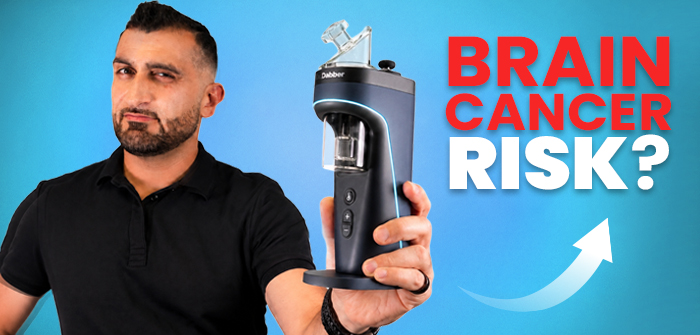
Hello everyone, this is TVape for Nima TV or the other way around as I misspoke. The World Health Organization Agency on Cancer Research has designated radio frequency electromagnetic fields as a possible carcinogen which basically means they have found a connection. They don’t know how big or how little between electromagnetic fields and brain tumors.
Well, the interesting thing is that the device that we’re going to be tearing apart today uses an electromagnetic field to create heat inside an induction heater, which is basically a titanium crucible. And it does so very well. It’s one of the most popular units. People absolutely love it. And today, we’re going to be looking at this very unique technology we’re going to get in there. But remember, it creates an electromagnetic field and you hold it and you move it close to your head.
And then in the end, I’m going to tell you if that’s at all relevant or if you should be worried forever from now on. Follow me along past the 30 secondond mark at least because that’s what YouTube really cares about. So, I got to make this really long. I’m kidding. Let’s hop in for the top down. So, we’re going to get right into it. Um, here is the Dr. Dabber Switch uh 2 and got very innovative technology into in it. This one is brand new, so to say.
We just unpacked it here because we’re going to do the temperature test with it. one is the one that uh has gone through some testing with the team obviously um when we go around figuring out how well it performs for the best of pages and such. I want to show you guys this as well which is the Ispire Daab. Um and this one is a different manifestation of the technology.
You can see here it’s got the membrane the metal that gets heated up through the induction heat around the glass but it’s not perfectly tight unlike what you see unlike what you see with the Dr. Dabber switch 2, which is key because that enables you to transfer the heat in a much more predictable fashion to the glass.
Uh, and that will help you keep the temperature tolerance uh, around the temperature that you set the device at, uh, in a lower band and as a result get more predictable vapor thickness, which is something everybody likes. So, accur accuracy of temperature is one of the major factors with these URIs. You can see that you can set it at a specific temperature, but it’s technically not going to be that temperature. probably not very accurate either because on top of this thing that I just broke down to you guys, just a technical factor, uh the conduction is not very as predictable. Uh you also have zero temperature sensing around here. So all of it would have to be done through simulations, which I doubt they did, but um it is actually a fun fun device to use.
Uh and they have limited editions of it. Uh we have it as well. And it’s actually a fun device to use. Obviously a little bit older, but we’re going to be looking at the new gen of how this was imagined and put in place. So before we hop in the test, I need you to let me know this is a unit uh it’s the regular Puffco Peak. It’s not the 3D XL. Only the heating chamber is different on those. We can tear this down. And this unit has been tested a few times. We can tear this down for you in the next video. So you can put in the comment below if you want this torn down or if you prefer the limited edition brand new one to be torn down. So this one is obviously more expensive. It looks more fancier. You see a dragon with his hammer uh let’s say obsession. First comment get pinned to the top.
You say Puffco Pro White and the limited edition gets pinned to the top and then you guys vote and then whichever one gets the votes that that one is going to get uh torn down for science. No, no, not yet. Not yet. I got some for you. All right. So, here we got the three uh E-Rigs. We got the Switch 2, we got the Utillian Turbo, and we got the Puffco Peak Pro. And all three of them uh we kind of like set up and we uh preheated a little bit uh ready for the test.
We’re going to use this uh let’s say touch sensor to see the temperature. And again, this is not going to be as accurate as uh thermal cameras. Thermal cameras have their own limitations. But for this one, at least if we’re comparing all three of them, they should be roughly coming out around the same temperature because we’re setting them at the same temperature. And um Matthew, what did we set the temperature for all three of them at? It’s 428 Fahrenheit and 220 degrees Celsius, right?
Got Matthew is new here and we’re looking forward to having him help with more with these videos. So, we got here the Puffco Peak Pro at a touch sensor. So, it’s set at 428 and the reading here should to some degree be similar to the reading with the other E-Rigs, some degree. And we’re getting up to like 400 and I’m putting it in the same spot in a cheater.
And here again there’s some measurement details because on the Puffco Peak Pro the sidewalls heat on the Dr. Dabber switch the crucible hits at the bottom as well I think. So it would be assumable that if it could be a bit higher than 400 but at the core of it they’re the same 428. But we’re going to see comparatively here. Let’s heat the switch as well.
I’m going to stay here one more time and you guys can see how fast the switch is getting to heat up there because it’s an induction heater. We’re going to tear it apart and look inside. And I’m going to explain how that one works, why it’s so so let’s say advanced and special in its own way. So here we see with the Puffco Pro measuring this way, we really kind of like scratch 400. And that’s about it. See, we kind of barely get up to 400.
So it’s like 28° less than what the display shows. Now let’s go to the Dr. Dabber switch. And I want to make sure I touch the bottom corner of the heating chamber in approximately the same way. And we got see with the switch you’re definitely higher. So I would say the switch is definitely hotter than what it displays while the Puffco Peak Pro Wow. The The Switch is definitely hotter. I don’t I think it’s even hotter than what it’s supposed to be at.
Now I understand the bottom is heated, but it technically it shouldn’t be going above 428, especially since it’s conducted through another glass crucible with the Puffco Peak. Um, sometimes I had the suspicion it’s a bit colder than what it’s set at, but the switch 2 is definitely hotter. Now, there may be a measuring error, but we updated the switch 2. This is a brand new switch, and you can see for yourself what it’s set at and what the measurement device is showing.
Now, again, a thermal camera is more accurate, but it would generally not go above what you’re measuring. So, this is the Utillian Turbo. We are the manufacturer behind it. So, uh, our engineering department in Germany works on that. This is, uh, Dr. Dab, an American company, very smart folks. They’re all in the premium field. They’re all roughly around the same cost. Each has their own advantages. And we can see here in the temperature levels, it’s supposed to be at 428. That’s 428. 430. It’s overshooting by 2°. Guys, can you re-engage the Puffco Peak Pro one more time because I I feel like it should be more accurate than what we noticed. So, you see the Utillian Turbo just by straight up measurement in front of you seems to be the most accurate. Now, I didn’t know that. I actually thought we were going to do the test. I thought the Puffco Peak Pro is going to be the most accurate.
Their engineering department is very strong and then I thought the Dr. Dabber and then I thought the age. But in testing, you always get a bit more information. And as we do more teardown videos, we’re going to repeat these tests with different devices. So maybe this specific unit is acting this way.
And next time we use another unit because we’re going to tear this one down or maybe you guys upvote the comment that you want the special edition one broken down and we’ll have another unit to test. So you see the Puffco Peak Pro is actually colder than what it should be. So then you get a bit more wispy vapor on the Puffco Peak Pro at the same setting. But now let’s get into the tear down. There’s a new theme we got here. So I got the camera.
So sometimes I want to talk to you so you see my face and Ojigo can put it in a little round circle in the bottom of the tear down video which is from top down. And I got like so many hands right now. There’s Eve working. Matthew is like giving me stuff from the side as you can see. dragon is is very keen on me using the hammer today. Today we’re going to make his dream come true.
Or maybe if you upload that comment and put a comment down there that you want that limited edition Puffco Peak Pro to be dissected next, we would break the break the whole thing apart. And those are really beautiful. It’s going to feel so good to destroy it in a odd way. Uh and maybe then we can use the uh hammer that dragon wants us to use. So here you go see the crucible.
And when you see like extra dark um extra dark concentrate, usually it’s a bit of a sign that maybe it was overheated. Now, now here’s the thing though. Some people like it like that. So you can’t necessarily say this is bad thing because some people just like to have very thick uh vapor. I’m going to hold it in the right spot for Eve to get a macro shot in. So it would be a bit of an indication that very thick vapor was generated with it. Maybe a little overheated.
I like when I do concentrate, my concentrate is generally gets a little dark but not like this much less and then I just clean it out. I think Roger the CEO of uh Puffco is also super keen on lower temperature vapor. Tell you guys there’s three different areas where which makes the ear good and the Dr. Dabber switch two uh among many influencers is known as let’s say the best or uh among the best or the best. Now these two are usually battling.
Obviously the the Utillian 8 Turbo is fairly new. The previous Utillian 8 version was a budget unit. So these two are usually battling for many people have the opinion these are the best. This is the best. So it’s a very good device. And there’s three things that make it generally the hydration, the airflow or in this case for the switch 2, the airflow and then the heating profile how accurate it is. Uh now with the Dr. Dabber switch.
In the last one, I told you guys about some patent drama which basically took the card from Focus V out of the market for some time because they had the uh they conflicted with the patent that Puffco had. Uh um this is not quite um let’s say the same, but you can see that the same type of and I’m going to put this over here. The airflow intake uh it’s similar to a joystick, not quite not the same construction because there’s no silicone as a membrane. And if I’m not mistaken, I’m not an expert. Don’t quote me on this. Please, patent lawyers, I mean, uh, you do your job, don’t quote me, but my, uh, understanding from reading the text is that this is not a considered a silicone membrane. So, this joystick style or this air intake is fine. And you can see even the new uh, Carter Sport uh, uses this type of system where it’s a glass bubble, so to say. It’s a glass bubble. Can you micro micro lens on this thing?
And I got to remember to look at you guys over there. So, it’s this glass bubble thing here. Um, and this glass bubble takes the air in from here. And the good thing is, of course, uh, that this like like you can have something like a joystick, a directional air intake, which I think is the let’s say uh, second most advanced type of air intake. The most advanced I find is a dynamic vortex, right? But this gives you the satisfaction of being more engaged.
The only problem with the Dr. Dabber Switch 2 is that it’s glass. And you can see in this tester unit, it has chipped off the front because if you’re not careful and you’re being crazy, you you could write whip it at the corner of the heating chamber, which is also glass and they could break, right? Um, but it wouldn’t happen to you if you just pay attention for a little bit. So, I wouldn’t say discount. This is their style.
Every manufacturer has their style of putting things together with their own tradeoffs and their own advantages. And this one uh switch is known to just have a lot of let’s say the heating chamber is big and robust and these crucibles are glass. You do your vaporization is glass whereas when you do it with let’s say the Puffco Peak or you’re doing it with the Utillian uh 8 Turbo it’s ceramic. Oh yeah, they’re getting it from the side with that dynamic vortex. Yeah, here you go.
So this thing rotates at the bottom and takes the air in. I have a video for the Utillian Turbo which is called how an influencer crushed us. So you can go check that out. Rodrigo just put it at the corner here. And when you want to change it, it’s still relatively expensive because it’s super accurate. So they have to manufacture like I don’t know like 10 of them and they can only sell five because the other five they’re out of tolerance. They got to just toss them.
That’s how they manufacture these. The signature uh Dr. Dabber would just put it there and it just slides right in. And that’s not easy to do. They had to make five 10 of these and five of them went in the garbage for these to fit so well because the part underneath is a crucible made out of metal. I think it’s titanium. I’m pretty sure it’s titanium. And that can be done very accurately. Still has a tolerance. Glass can’t.
So then you have these spiels that need to go with that you toss a bunch. Good. You have a bit of a wider bubbler than the traditional, let’s say, the the Utillian 8 Turbo. It has it’s it’s not quite um it’s just a different setup. This one, the holes are towards the bottom. So, hydration matters. I’m not going to get into detail here. I’m going to do a whole another series on hydration and bubblers and such in in another video.
You can tell me if that’s at all interesting to you because we’re going to get into dabri as well and recyclers and stuff. And you can tell me if that’s something interesting for you. It’s less electronics, less batteries, and more into hydraulic movements and such. So, we talked about the air intake. I’m going to put that to the side here. I’ll put it here in the crucible. And now we can open it up like we did with the switch. Go.
All right, now we’re going to get into the Dr. Dabber Switch 2, which is the most advanced induction heater out there. And as usual, they have this pretty little silicone thing they put on top. And what I can tell you is that unlike the Switch Go, which had a bunch of proprietary screw stuff going on, it looks like when they did the Switch 2, they weren’t as stingy with uh securing the device against other people trying to get in because this is a very regular skew screw.
Now, we’re going to get in there and see if there’s any other hurdles, but so far so good. Okay. So, here. Let’s go in there. And the screws get bigger and fancier looking as you can see. And one thing I can tell you guys is that I have been uh like our YouTube channel has been around for like 15 years. That’s almost 15% of a whole century, folks. Okay. A whole century. That’s like 1.5% of a millennia. All right, if my math serves me well.
And what I’m trying to say here is that we have 70,000 subscribers and I have Rodrigo that has told me that he’s going to blow his brains out and work overtime and in a metaphorical way unalive himself. Okay. Like working. I mean like he work a lot. Yeah. Until So, let me tell the story while I’m doing the work. So, because Rodrigo is battling my six-hour videos. Ah, yeah. So, um, what what was I telling you guys before we confronted the screwdriver?
So, as you can see, they switched to shenanigan screws, so you can’t get in. So, I’m going to bring my shenanigan screwdriver. Um, so what I saying is that we’ve worked on this YouTube channel for millions of years, a small fractions of a percentage of millions of years, and we are at 70,000 subscribers as of last video that we published. So, thank you so much for getting us to 70,000. We’re immensely grateful. But we want that YouTube plate, that 100,000 YouTube plates.
So, if you’re not subscribed, which about 60% of you are not, help us reach our dreams of being YouTube subscriber famous. All right. And we’re at 70,000. We need 30,000 more. And since I’m doing videos, we need at least a couple of weeks to reach 200,000. My math is not that good today. Yeah, people are laughing here. But what I’m trying to say is that just subscribe. You get the notifications. And as I told you, next week I may break that limited edition super fancy Puffco Peak Pro.
You do not want to miss that. And while you do not miss that, you Oh, yeah. There we go. Dragon is on it. Dragon is on it. Well, while we’re going about that, you also get to make someone happy with getting a YouTube play. And you may actually go to heaven because of that. You’re welcome. Subscribe. [laughter]Yeah, HR. I can say going to heaven to our audience. They don’t work here. I can’t say it with employees. Like, I can’t say Matthew is going to go to heaven. He just started here.
But our audience subscribing going to heaven. Totally cool. The good thing about being CEO [laughter]I’m kidding. Do not cancel me. Okay. Do not unsubscribe. I’m trying to get in here. I got one of them out here. This one seemed to come out pretty easy. So now we need my favorite tool. There we go. Sometimes you don’t need an engineering degree to open these. You just need a little muscle. And unfortunately, that’s something I’ve been working on.
[laughter]Yeah, there’s [clears throat]some sort of latch. There’s some sort of latch here somewhere. Now, my target is to open this and then put it back together without breaking it. So, Rodrigo, this may take a little while, but [laughter]we just got general liability insurance. So, dragon is totally cool. If you’re an insurance underwriter checking in on us, just check to the next video, please. You do not want to see what’s happening here. I tried to do this civilized. Wait, wait.I think you can use a blade and just Ah, good. Wait a second. If the batter is in like this, first of all, maybe these need to come out. But it’s this thing. Look, it’s the button getting stuck. So, how do you get the button out? There we go. So the way they do it sometimes that the the buttons secure the thing in place. So I just took the button out and now just slides right out. All right. And this this I could identify within seconds.
It did not just take me like 60 minutes with everybody standing around trying to figure out and Rodrigo just cutting it out. I knew all of this. So now you can like this video for the sheer knowledge that I bring to the table. So here we can see the insides. I’m going to go through some components that I can tell you guys already what they are. So this is this is the signature coil copper coil that creates the electromagnetic field. So just look at the magnetic field here on this side.
If you switch that back and forth really quickly. So these components do that and this thing creates that magnetic field. If you do that really quickly and the systems do it like some like 100 or thousand or 10,000 times in a second. So it’s really quick because it’s uh electrical so to say. So what happens inside the metal there is free floating electrons. Okay. So when you have a magnetic field they kind of like arrange in a in a pattern.
You see that all the time in all sorts of experiments. So what happens is this magnetic field when it switches around the electrons move and the electrons when they move inside the metal because the there’s friction that obviously it’s not friction less to move electrons but there’s friction. every time they move up and down because of this oscillating electromagnetic field. It creates friction and friction creates heat.
So heat or temperature is in essence um the pace of movement of particles you can call it that inside a material right. So if you have something that’s 0° they’re obviously moving slower than something that’s 10° Celsius. If you go to absolute zero there’s I think the physics term would be that it basically it’s not moving. If you’re a physicist if you’re an engineer you can correct me down there. at absolute zero are molecules moving at all that I’ll leave for you.
But basically that’s how this this titanium crucible this thing where the glass cup sits in heats. Okay. Now here’s the thing. This doesn’t have a temperature sensor on it. This thing I’m going to show you the temperature sensor when we go through this part. It’s I think a fabulous one. It’s a really cool one. But still it measures the temperature down here at the bottom whereas the concentrate goes inside the bucket. So it’s about one layer away.
So then through conduction the temperature the the temperature comes into the bucket. But because it’s very snug with simulation you can make sure that you’re approximately within a range that is reasonable or accurate. Now we saw in our temperature test that it does actually not that accurate. But at least that’s in theory how it should work. Okay. Now uh we’re going to do more temperature tests with time. Maybe it’s just this unit. We’re going to see it.
Maybe Dr. Dabber has done an update already behind the scenes. I don’t know. But this unit wasn’t that accurate, right? It was like about 20 degrees off if I’m not mistaken. 15 degrees, 20 degrees. So that’s how it works. So we’re gonna put this in here and we’re gonna get more into the components.
So this coil, it’s an internal helico induction coil and that’s just a fancy name with it’s a very it’s they use usually copper because it’s um basically very low resistance for um an electrical current to go into it. And by the way, when you use an induction heater, the main advantage why this unit uh is loved the way it loves uh is loved is that glass crucible here where the vaporization happens. It basically does not need any type of wiring or anything to go to it.
That’s the main advantage of this technology. You can kind of get in a nutshell that and you get a very even heat inside the metal that you’re trying to heat. You don’t with the let’s say the Utillian Turbo. You don’t get those dynamics. Obviously, you you have these two contacts that need to go there. So, you kind of have some sort of wiring that’s going to the bucket. And here’s the bucket, which is is a swap cell tech of utilion 8. So, you still have a board of heaters into it.
So, at a at a millimeter scale, you’ll see the lower part which has these these and do we have the macro lens on this? the lower part which has the board in it gets hotter than the upper part. And even these specific lines on a let’s say a split of a millimeter, let’s say tenth of a millimeter, there’s slightly different temperature. So it’s not perfectly even. The bottom is obviously not heated.
There’s no there’s no heaters in there, but you don’t have that with an uh with an induction crucible. The whole thing heats to the same temperature degree based on the magnetic field which is honed in on it. Now that was the pull of the video. I wanted to basically tell you a little bit about the u basically uh electromagnetic field that is caused to because obviously there’s some research out that I that I quoted to you in the intro to spark your interest. I am going to get to that. Now here’s the thing. The the crucible goes right in the center here. So the key technological part where all the smart engineers from Dr. Dabber work on is to create the right size magnetic field. That magnetic field is focused in on this small scale and it’s oscillating here. Now, you can measure it on the side and even when you’re holding it, it’s close to your hand and potentially parts of it going through your hand.
That’s an oscillating magnetic field. But the size of it, and this is where the the research becomes somewhat irrelevant when you’re talking about a device of this size, that research, which maybe scared the living crap out of you, is meant for think big MRI machines where the whole field is being put through your body or you have these massive induction industrial induction heaters where you’re next to it and the induction field is massive. It’s like, I don’t know, as big as a room.
So, yeah, that in that research, you want to kind of avoid being in that field for too long. These are super small. there for a small duration in a small space and it’s generally not getting very close to your brain. Um so that’s where it becomes like something like okay microwaves in the other room running it and it really doesn’t have an impact on you you know. So that’s um I hope that gives you some some confidence.
I I put that in the video because I wanted to kind of create a little hook to create that scientific kind of curiosity in you to understand what’s going on. And as I’m telling the story, I’m going to try to get deeper into the device. And by the way, this electromagnetic field thing was something that um Tabletop Bong, which is also a very uh very unique YouTube channel. He has his own unique takes. Um very insightful.
He’s got some glass bubblers that we used in our experiments on our best of page. So if you go to our best of best of electric uh page dvape, you’ll see the experiments that we performed there inside the slider. So if you go to the very end, you see a glass bubbler where we’re trying to simulate through a machine a pump the thickness of a vapor coming out of any device at a specific temperature and it’s all listed. It’s basically an experiment.
You see it and you can see the density of the vapor. Nowadays, everybody wants you to wing stuff so they can see you authentically struggle and figure out stuff as you go. So, I can come to work being not prepared because that’s what people want. You know what? I’ll just cut through. It’s just taking way too much time. We’re going to take the battery out. And for a lot of people that want to know what the mAh is, uh you can zoom in on it.
So, this is uh 9,000 mAh. uh which is pretty high. We’re we’re developing a product with that size. Another one with 30,000 we’re working on. But those are different types of devices. You’ll get to know when we launch them. You can’t really charge just with the poopy USB one amper chargers. You need kind of like a fast charger. Otherwise, it takes ages or just doesn’t even do it. Every manufacturer has their own way to make the batteries extra, let’s say, safe.
And you can see here that again the batteries are grouped together with their own separate board away from this board. And that’s generally a practice that’s recommended because if you have something let’s say failing on this board and if we go historically back with some incidents in the vape sector they had obviously reasons for the batteries failing. Here you can see Dr. Dav even logoed the board here.
Uh every board is custom made so you don’t have to do that but it’s cool that they did it. And there’s a QR code. So if you guys I can macro zoom on this QR code. If somebody’s interested they can just hold it against the screen and go see where this leads to. It’s a phone number. Yeah. That is so interesting. Okay. It’s a phone number. You can call Dr. Dabber. I guess so technical support. Excuse me doctor. [laughter]You can see the board is separate here.
So if anything happens and let’s say this board fries, you do not want the management of your batteries to be fried as well. So generally what they do is they always individually set up the the board that manages the battery separately. So if something happens that’s unforeseen, these usually just cut off the battery and the battery doesn’t work anymore and the unit is fried, right? Unit is fried. Also a um let’s say keyword for when people bought their Venty and it gave them the error.
We can also open a venty which is a $500 unit, $400 unit, but you have to recommend it. You have to ask for it in the comments or just ask for it in the comments. Whatever else you want us to break apart, but that one looks pretty cool inside. I got to show you guys that one eventually. Right. So, here. And very expensive. So, if you want, they don’t have a limited edition for me to break apart though. So, here you go. This is the 18650s. Three of them.
And the reason you have so much battery is because these induction heaters there is they are in efficient they are efficient in a certain way, but they’re also inefficient in some other ways, right?
Especially like here for example if you you have the macro lens on the crucible here like that’s quite a bit of mass and that mass while it’s good to keep the temperature stable inside the heating chamber um it also takes a lot of energy to heat little brother of the switch 2 the switch go the newer model and you can see the temperature technology was more of a I think a dual mesh coil system and look at the battery here the battery is 1,600 mAh. This battery is about half of one of these.
Here is the LED light strip comes out right away. So if you want, you could just open up your Dr. Dabber, put this on your curtain, and you would have something something dangling there with collars. Oh yeah, there’s a clasp here. [laughter]Getting the beer. Nice. [laughter]Dr. Driver has a way of designing these devices. I end up starting very careful and ending with tearing the whole thing apart. This is very interesting. The part around it is all done in one mold.
Usually, usually you would do two molds and then kind of like screw them together in the middle, but for whatever reason, this whole thing is one mold. little beautiful devices. So, I’m not going to question if this is the best way to do it. But clearly, it is all one mold. The cool part is I already got some feedback about my previous videos that some engineers in the space watch it especially when they have immediate questions.
In fact, our own uh our own team went and watched the Utillian [snorts]8 Turbo uh teardown that I did because they quickly needed to see something and the video was more top of mind. They just watched it. So, already useful. And here we go. There we go. Yeah. So, perfect. We got this out. We’re going to put this to the side here. The buttons are plastic. No, the buttons they actually made them of metal. Let’s look at the components here.
Um, you saw with the uh core uh the proxy core, they had this very nice dual story system. You can see it as well. These guys have it as well. And now we can look at the different uh things. Now, one thing in a previous video, I did a mistake. We saw a component like this before. I said in the other video something that was not accurate. I thought it’s maybe a tiny battery to keep things together, but you actually don’t need that.
The big batteries, even when they’re super drained, have enough battery to keep the little memory inside the device, for example, what temperature you set it at last time it was on. So, the cool thing with with this one is this component, if you see, it’s like kind of like a half circle. It is placed inside this hull and this vi vibrates by rotating inside this hull. And that’s how they create the haptic feedback, the vibration. So, that’s a haptic feedback component.
So, uh let’s go look at a couple more other components. Here’s the buttons as usual, and they’re off the shelf as well. You can press them. That’s why this hard button had a bit of silicone inside of it because every time you press it, it doesn’t, let’s say, exert too much pressure on the button, and you get this nice clicky sound. So, this is a more, let’s say, expensive button component. Goes hand in hand with this being a more expensive comp, let’s say, device.
These things are needed. Um I’m not exactly sure what they’re called but uh you need quite a bit of energy quite a bit of let’s say voltage or amperage to go through this wire in order to create a magnetic field.
So for that you need to convert the the voltage and amperage inside these batteries for the right let’s say uh current and that’s when you get these five components you got some some uh there’s four four here there’s four here right so they’re converting um the uh voltage and amperage if I’m understanding it right to be at that uh right level to create exactly that magnetic field which has uh which is the size of the crucible because if you’re minorly off it won’t work properly. minorly. We’re talking about maybe like a millimeters, right? So, you need to be very accurate with the amount of power you put through in here and how you put it through it to create that let’s say butterfly shape magnetic field and particularly you can put it on screen is bigger, smaller and how the crucible the the titanium crucible or the uh it needs to be a conductor.
Uh I think I’m pretty sure I was told this is titanium but uh that’s basically uh what you would need to do. I’m I’m not actually sure if titanium is a conductor, but putting all my knowledge together, I would assume it is. Please, if you’re an engineer, if you know this for sure, if you have AI handy or something like that, put it in the comments. If I say something that is incorrect, put it in the comments.
I comment underneath and pin it to the top so everybody can see the corrections and such. And the coolest component of them all, and I’m going to break these apart so you can see it, is this thing. I tore it off. Check it. Check this expensive component that is basically worthless right now. Uh look inside. Do do you guys see that little lens inside that hole? Yeah, this it’s like um lens because it’s a optical lens.
There’s some some uh infrared sensor and this is a really cool unique to Dr. Dabber Switch 2 even and it’s absolutely essential here. And I’m going to explain why. But you can see this component. This is not very easy to find. It’s not very common. This is a very expensive component with very specific specifications. This is the core of the technology of this device. You got this induction electromagnetic field generator that you have here.
But then in order to get it back in bounds, you need a temperature sensor in order to hold it in check, right? Because you want to make sure it runs at the temperature you set it at. If you’re from Dr. Dabber, maybe maybe you want to comment in the video saying, “Hey, we maybe if you fix this, it was calibration issue on the first patch.” This happens very often. Happened to Utillian as well. We don’t know.
This is from the first batches, but with time we’re going to eventually test it in another video as well, and we’re going to see. So, this is a medical-grade IR pyrometer. You send photons. So, you you have infrared, you have some sort of um let’s say particle, take the information from the surface of the component, and it’s not this one. It’s actually it’s pointed up. It grabs like a a infrared photon. I guess that’s what they called. A photon is a light particle.
So I assume infrared particle would well infrared is a specific wavelength of photons. So would bring the information to this lens. This lens would sense it and based on the wavelength uh or the particle itself, the information that it carries, it would take that back to the board. You would know what temperature it is. So there’s two ways of measuring this temperature basically.
Either you do it with touch, which is as I said the device that we talked about, or the video from last week, I had a infrared sensing camera, right? Where a camera shows it, right? Same same idea. Either you touch it or you need to photon from the area to bring the information back to you.
I’m sure you guys love the double slit experiment which actually proved that wave depending on being uh that light depending on being observed or not by a device like this either behaves like a wave or a particle. When we don’t observe it, it behaves like a wave. So I think I got that right. Um so that’s a very cool thing that kind of crosses the road with with uh thermodynamics and quantum mechanics and this is happening right in here when you enjoy yourself.
And I think you you have now a bit level a bit more of appreciation about all the crazy minds that need to work here on Dr. Dabber’s engineering team and all their contract manufacturers that make this stuff come together. And I think this part is cool, too. Maybe I should just break it off and and show you guys. Oh, these seem to be some sort of maybe not exactly sure what what component this is. This is very unique. I’m going to still break it apart.
There’s some sort of solidified something in here. And it’s placed around the infrared sensor. Oh yeah. Maybe the objective of this component is to reduce the impact of the mag electromagnetic field on this on the rest of the board going downwards. It’s just kind of like catching the waves. Maybe that’s what’s going on here. So if you’re an engineer that has worked with induction heaters, I would love for you to chime in.
But I’m pretty sure because this seems to be some sort of cou solid material. I can try to break some parts of it. Dish. Oh, there we go. Nope. Not yet. This is what I got to deal with. So, I think we also need an IGBT here, which is a unlike popular belief, uh it’s not part of the LGBT community. It’s a component. It’s a insulated gate bipolar transistor. So, it is bipolar. It’s not Yeah, it’s just an electrical component.
And what it’s meant to do is supposed to uh it has three legs. And what it does is it does the oscillation of the magnetic field. So, basically, it just switches the current back and forth. Oh, here it is. I found it, guys. This is the IGBT. There we go. And what it does is just switches the electrical field back and forth. And I’m pretty sure this is the component. Oh, no. This electric this No, no, no, no, no, no. That’s that’s that’s the that’s the LED.
Genius of this device is the heating technology. That’s unique. They had to make it work. Now they’re kind of like moving away in the go for it because you can’t make this much smaller. Size is key. So with the with this device if and this is actually engineering is all trade-offs guys. So you can’t make a best device for everyone. They’re all they just maximize on one vector and then some other vector has to give.
So obviously you can get this induction heater which has this beautiful let’s say IR sensor which feeds the data directly into the board. So it regulates the temperature right here for you. Now, this one we saw wasn’t as accurate as we would have liked to, but still the nature of the technology is very unique. It’s very awesome, but it’s big.
And then you got a very custom setup here that’s going to be more expensive, but it’s got these features that everybody likes, like a big bucket that’s not wired in place. You can replace it easily, right? But the trade-off is most people like their devices a bit smaller and lighter. This battery is huge. It’s heavy, right? So, what happens is somebody’s going to say, “Okay, this device is best for me. I like this. It’s even cheaper.
The technology is more, let’s say, simpler, more rudimentary. It’s got a mesh coil, right? Uh, some other person’s going to love this. All right. So, um, and to wrap up, as we were looking around, we found a component here with three legs. So, this may be the IGBT component. I’m going to try to tear it off. Uh, because the other one I just saw six legs and I just am wondering if that was the actual oscillator. Not that I show you guys some that is not the oscillator.
So, I’m going to tear this one off. Look at the intricacy of this component. And uh obviously there’s a three legs which I was looking for three legs and a heat shield. Okay. Something to uh to get the heat away because the component gets hot. Now, we see one leg here. So, I’m going to try to tear this away to see if that’s meant to be an electrical component or if that’s just meant to move the heat out. And this does look like a heat sink.
So, engineers, influencers, and master CEOs of the world. I think we got a winner here. Yeah, because there’s no board on that side. And on this side, there’s nothing either. I think this was the IGBT that helps the magnetic field oscillate because if you don’t oscillate, it’s just a field. You got to do that [laughter]B and it creates the heat. What? The B. All right. So everyone, uh, thank you very much. We’re gonna go into the outro and wrap this video up for you.
So that’s the tear down of the Dr. Dabber Switch 2. Great thanks to people like Jamie, the CEO of Dr. Dabber, for being such a cool guy, coming up with these crazy technologies and the folks there that work there. Uh, if you’re an engineer that works there or in any other company, feel free to chime in. These videos are for the more advanced veterans in the sector.
And now let’s to wrap it up about the early part of the video which is basically the the story or the hook and that is if you have a switch two do you really need to worry about brain tumors? And the answer to that is most likely absolutely not. And I’ll explain it why because the magnetic field created inside a switch 2 is very small and it’s very tuned to the inside of the device. Even where your hand is, it drops off really fast in the magnetic strength that it has.
So it becomes somewhat close to absolutely relevant because the research that was actually conducted that got the World Health Organization to have that classification which by the way they also have for red meat if I’m not mistaken done with large scale industrial induction heaters and they were also testing these things for the cell phone industry.
So basically after going through the research and also using some AI to make sure confirm that what I’m saying is in line with what the AI kind of analyzes, what the general knowledge is of humankind is that yes, it’s pretty much irrelevant for small induction heaters. We’re talking about really big ones or extreme exposure over a long period of time. We’re talking about hours and hours and hours throughout the day, which doesn’t happen with your Switch 2.
So back to the technology, the induction heater with the infrared sensor is a very cool combo which we saw in practice with the temperature sensing test at the beginning of the video that it didn’t really transpire in a more accurate heat signature. The Utillian Turbo was more accurate. The doc the Puffco Peak Pro seemed to be more accurate though more on the lower side. It was also off by something like 10 degrees but to the downside.
The doctor I have a switch to was up to the upside by about 20 degrees. Now I have an explanation for that. Now the doctor down and this is something that I’m coming up as I told you I’m not specifically preparing for these videos to make sure you get the raw kind of feedback of me and I’m probably one of the most experienced folks in this segment um in the industry. So we’re not all knowing. We make mistakes all the time and we try to fix it like everyone else does. So, let me get into why I think it actually could still be more accurate than the 20° that we measured. And that is because it does get the heat through an extra layer of glass. That means it’s conduction heat, right? And when it gets through that conduction heat, it needs time. That means when they did their testing to assess, let’s say, what they should keep the calibration on, don’t forget that we have about a let’s say grain size of concentrate.
In many cases, people like that like the Switch 2 use massive massive concentrate uh let’s say portions that they put in. Check out Dope As Yola’s channel or even Chrissy Harless, right? They they’re pros. They put a lot of stuff in there. They’re not like the average user like let’s say me. I’m probably above average veteran, let’s call it, but the average user puts like half a grain and they’re okay with now that grain the moment you put it in there is room temperature.
If you keep it in your fridge, it’s actually lower than that, which sometimes I do to keep the turppines in there. What happens is they suck the temperature out of the walls. And that could then result because the induction heater then through conduction that needs to get through the glass. They determine during the testing that they want to run it a little hotter because it takes a bit of time to resupply that let’s say concentrate with energy or temperature.
And that’s just what they decided. And let’s look at the upside. You also don’t need to worry about the brain tumor. All right, so with that said, I’m going to wrap this video up. I hope you enjoyed it. In the comments, I really need you to tell me what you want me to do next because I’m literally this Dr. Dabber switch and the puffco that is coming out in a couple of weeks or a week is your ideas.
So, some of you may have the idea like I actually got today of me tearing apart a dishwasher. Maybe not the best for our YouTube channel, but still I’m open to the idea. Put it in the comments below. And with that said, I’m going to use the outro that one of you in the comments said would be a good idea. Thank you very much. I’m Nima. Let’s tear [ __ ] down for science. That’s the outro he told me to use. And well, I forgot his name, but he’s good.
I think this should be all black and white because at this point, everybody would have turned off their TV and you got these other videos here. But you’re still with me, which is good. I get more time on video. Rodrigo, you decide when to cut all this [ __ ] out. No, it’s not a pause screen. I’m actually still alive. Oh my god. Anyway, sorry. Sorry everybody. Let’s go home. Let’s go home.